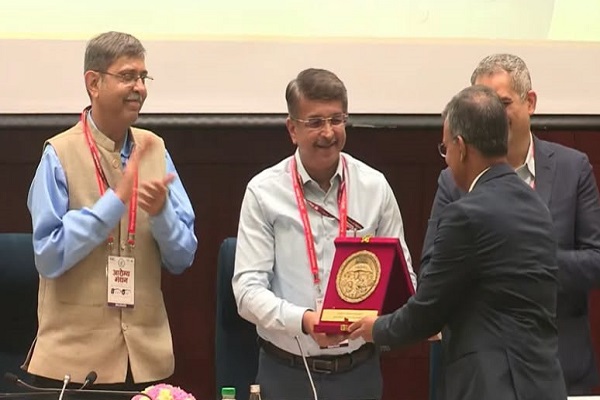
 Agartala, Sept 25: Tripura has set October 31, 2026, as the target to complete a major phase of its digital healthcare transformation, with the state working to bring hospitals and grassroots health facilities under an integrated technology-enabled system. The roadmap was presented by Health and Family Welfare Secretary Kiran Gitte at the national-level ‘Aarogya Manthan 2026’ programme at Vigyan Bhawan in New Delhi on Thursday.
The event, organised to commemorate eight years of the Ayushman Bharat Pradhan Mantri Jan Arogya Yojana (AB-PMJAY) and five years of the Ayushman Bharat Digital Mission (ABDM), brought together senior officials and stakeholders in the healthcare sector.
Union Health Minister J.P. Nadda attended the programme, along with National Health Authority CEO Dr Sunil Kumar Barnwal and other dignitaries.
During a panel discussion on digital transformation in healthcare, Gitte outlined Tripura’s experience in developing the Integrated Health Management Information System (IHMIS) and explained how the state plans to use it as a foundation for a more connected health delivery network.
According to the approach outlined at the event, IHMIS is being developed not simply as a system for digitising hospital records or registration, but as a mechanism to link different components of the healthcare system. Patients, doctors, nurses, health facilities, pharmacies, laboratories and public health programmes are expected to operate within a common digital ecosystem.
The proposed system is aimed at making health records available electronically and improving coordination between facilities. It is also expected to contribute to shorter waiting periods, faster emergency response, automated workflows, real-time monitoring, data-based decision-making and improved grievance redressal.
The digital transformation is being rolled out across different levels of the state’s public healthcare infrastructure, including district and sub-divisional hospitals, community health centres, primary health centres and health sub-centres.
Gitte said the implementation process also covers supporting infrastructure and human resources, with connectivity, hardware, training and operational preparedness being taken up alongside the digital platforms.
A major component of the strategy is the integration of IHMIS with the broader digital health architecture under ABDM. Gitte highlighted the importance of ABHA, health facility and healthcare professional registries, interoperable electronic health records and consent-based data sharing in creating a seamless digital health network.
For patients, the system is expected to simplify several aspects of healthcare access. Digital registration, ABHA-based identification, electronic prescriptions, laboratory reports and digital health records could reduce paperwork and help maintain continuity of treatment when patients move between healthcare facilities.
The discussion also focused on the need for common standards in health data. According to Gitte, standardised digital information can enable hospitals, laboratories, pharmacies and government health programmes to communicate more effectively, while providing administrators with timely information for monitoring and planning.
He noted that interoperability assumes particular significance for a smaller state such as Tripura, where multiple standalone digital platforms could otherwise emerge across different programmes and healthcare institutions.
A unified digital architecture could subsequently support more advanced applications, including health analytics, management dashboards, clinical decision-support tools and artificial intelligence-based solutions, he said.
At the same time, the state is focusing on ensuring that digital infrastructure translates into actual improvements in service delivery. Gitte stressed that the effectiveness of the transformation should ultimately be assessed by how extensively and efficiently healthcare workers and institutions use the systems, rather than merely by the introduction of digital platforms.
Capacity building has consequently been incorporated into the state’s digital health strategy, with training programmes being conducted to improve the digital capabilities of healthcare personnel across all eight districts of Tripura.