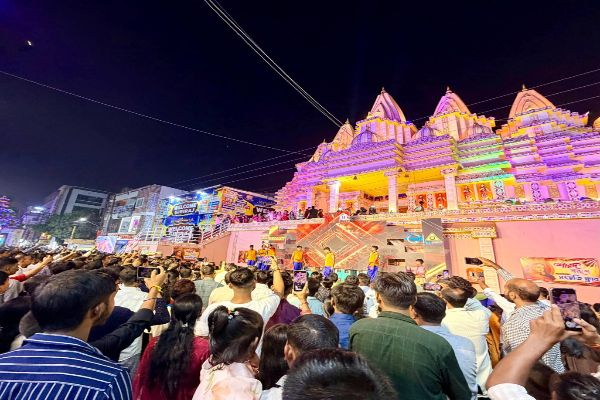
Agartala, Oct 21: The five-day Durga Puja celebrations in Agartala concluded peacefully, bringing the curtains down on a festival marked by enthusiastic public participation, elaborate pandal decorations, spectacular cultural programmes and the traditional immersion of Goddess Durga’s idols.
With the conclusion of the state's biggest festival, the countdown for 'Maayer Gomon' puja carnival has begun. The spectacular event will be held in Agartala on October 23 evening, with major clubs set to participate.
Thousands of people thronged the streets and major puja pandals across the capital during the festivities, while the immersion procession at Dashamighat on the Haora River marked the emotional culmination of the annual celebration.
From intricately designed pandals inspired by temples and heritage architecture to artistic installations, dazzling illumination and colourful cultural performances, Agartala witnessed a festive atmosphere throughout the puja days.
Families, groups of friends and visitors from different parts of the state participated in the celebrations, turning the city into a vibrant meeting point of devotion, art and community spirit.
The peaceful conclusion of the festival also reflected the importance of coordinated arrangements by the administration, police and other agencies to manage large gatherings, regulate traffic and maintain public order during one of Tripura’s biggest annual celebrations.
Dashamighat witnesses traditional immersion:
The immersion of Durga idols at Dashamighat emerged as the focal point of the concluding celebrations, as organisers and devotees gathered to bid farewell to the Goddess with prayers, traditional rituals and emotional expressions of devotion.
Chief Minister Dr Manik Saha also participated in the immersion of the idol from his residence, joining the customary farewell to Maa Durga. His participation reflected the personal and religious significance attached to the festival, which brings together people from different walks of life.
In keeping with longstanding tradition, the idol of Prabhu Bari was taken out for immersion first. The observance of this customary sequence added to the traditional character of the concluding rituals, as other puja committees subsequently proceeded with their respective immersion arrangements.
At Dashamighat, the final phase of the festivities unfolded amid the sounds of devotional music, chants and the rhythmic beats of traditional instruments. Devotees accompanied the idols in processions, while onlookers gathered along the routes and at designated viewing points to witness the farewell ceremony.
The immersion of the idols marked the end of days filled with prayers, celebrations and community gatherings. For many devotees, the occasion carried a mixture of spiritual fulfilment and sadness at bidding farewell to the Goddess, accompanied by the hope of welcoming her again the following year.
Major puja pandals draw huge crowds:
Agartala’s major puja organisers witnessed substantial footfall throughout the festival, with several prominent clubs and community organisations emerging as key destinations for pandal-hoppers.
Kunjaban Sporting Union, Deshbandhu Chittaranjan Club, Pole Star Club, Smriti Club, Nabadiganta Club of Joynagar, Ramthakur Sangha, Chatrabandhu Club, Lalbahadur Club, Netaji Play Forum, Sanhati Club (Ramnagar), Aikatan Yuva Sanstha at Santipara and Flowers Club at Math Chowmuhani were among the prominent puja organisers that attracted large crowds.
These pandals became important centres of attraction, drawing visitors with their distinctive presentations, decorative arrangements and festive ambience.
The steady movement of people across different parts of the city highlighted the popularity of community-organised Durga Puja and its enduring place in the cultural life of Tripura.
The variety of themes on display was one of the defining features of this year’s celebrations. Temple-inspired structures and artistic interpretations of traditional architecture featured prominently, while creative lighting and decorative elements added to the visual appeal of the pandals. Organisers sought to combine religious significance with artistic expression, offering visitors a diverse experience as they moved from one venue to another.
For many residents, pandal-hopping remained an essential part of the festivities, with people visiting multiple locations during the evening and late-night hours. The participation of children, young people, senior citizens and families underlined the festival’s broad social appeal.
Cultural programmes add to the festive spirit:
Spectacular cultural programmes organised on each evening of the puja were another major attraction, complementing the religious rituals and artistic displays.
Music, dance and stage performances brought additional energy to the celebrations, creating opportunities for local performers and cultural groups to showcase their talents before large audiences.
The evening programmes also served as community gatherings, allowing residents to celebrate together beyond the confines of the traditional worship rituals.
The combination of cultural performances, themed pandals and illumination helped sustain public enthusiasm throughout the festival. For younger visitors in particular, the celebrations offered an opportunity to experience the city’s cultural traditions while engaging with contemporary forms of artistic presentation.
Community participation remained central to the festivities, with puja committees playing an important role in organising events, maintaining the decorative displays and facilitating the movement of visitors around their respective venues.
Security and crowd management remain crucial:
Given the large number of people visiting major pandals and participating in the immersion processions, security and crowd management remained critical aspects of the festival arrangements.
Police personnel and other units were required to coordinate movement around crowded locations, manage traffic congestion and ensure the orderly conduct of public gatherings and immersion activities.
The concentration of visitors at popular pandals, particularly during the evening hours, made traffic regulation and pedestrian safety important considerations.
The immersion phase required particular attention, as multiple processions and the movement of vehicles carrying idols could place pressure on roads leading to Dashamighat and other designated immersion points.
The peaceful conclusion of the celebrations was significant for devotees, organisers and the wider community. Effective coordination among the authorities, puja committees and volunteers is essential during such large-scale public events, particularly when religious processions and mass gatherings take place simultaneously across the city.
While the festival brought considerable activity to Agartala’s roads and commercial areas, the successful completion of the immersion rituals allowed the city to begin returning to its regular routine after several days of heightened public activity.
A celebration of faith, culture and community:
Beyond the grandeur of the pandals and the scale of public participation, Durga Puja once again demonstrated its wider cultural significance in Tripura.
The festival brought neighbourhoods together, encouraged collective participation and provided a platform for artistic creativity and local cultural expression.
The concluding immersion ceremonies also reaffirmed the emotional bond between devotees and the Goddess. From the first glimpse of the idols during the puja days to the final farewell at the riverfront, the celebrations reflected a shared tradition that continues to unite generations.
With the idols immersed and the festivities drawing to a close, Agartala’s Durga Puja celebrations ended on a peaceful note, leaving behind memories of vibrant pandals, illuminated streets, cultural performances and enthusiastic public participation.
The city now looks ahead to another year of preparations, creativity and devotion before Maa Durga returns amid renewed celebrations.