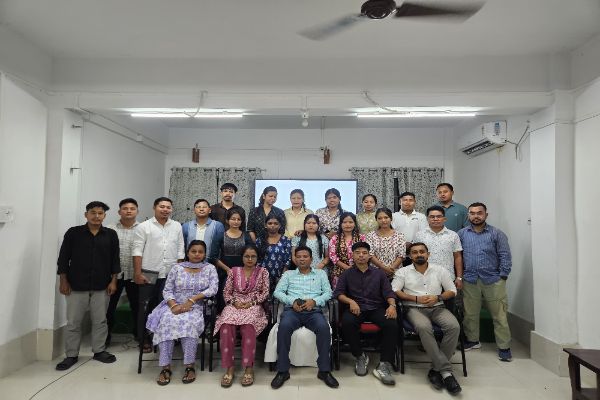
Agartala Oct 10: In a major step towards accelerating Village Development Planning (VDP) activities under the Tripura Rural Economic Growth and Service Delivery Project (TRESP), the State Institute of Public Administration and Rural Development (SIPARD), the project's support agency, has successfully organised a three-day Training of Trainers (ToT) programme for 18 Resource Persons.
The training concluded last Friday, marking an important milestone in the preparation for a renewed and intensified rollout of VDP activities across the project's operational areas.
The programme primarily aimed to strengthen the knowledge and practical capacities of Resource Persons on the concept, methodology, workflow and coordination mechanisms of Village Development Planning. Special emphasis was placed on effective training delivery at the field level, ensuring that the planning process remains participatory, systematic and responsive to the development needs and aspirations of local communities.
Following the training, the Resource Persons will be assigned specific blocks and villages across TRESP's operational areas to facilitate and accelerate the VDP preparation process.
The initiative aims to cover 260 villages across 23 tribal-dominated blocks, bringing together local-level government officials, community institutions, women, Anganwadi workers, School Management Committee members, elected representatives and other key stakeholders. Through their active involvement, TRESP seeks to ensure that village development priorities are identified collectively and translated into practical, community-driven plans.
Going beyond conventional village development planning exercises, TRESP has initiated a more comprehensive and detailed planning process designed to capture the development needs, existing infrastructure, service delivery gaps and future aspirations of tribal communities.
The resulting VDP documents are expected to serve as valuable reference documents for the Tribal Welfare Department and the State Government in developing strategic interventions, prioritising investments and shaping evidence-based policies for the holistic development of tribal areas.
The implementation of VDP activities had experienced delays due to the Model Code of Conduct associated with the Autonomous District Council (ADC) elections in April and Village Committee (VC) elections in September. With the completion of the latest ToT programme, SIPARD is now strengthening its field-level preparedness to accelerate the planning exercise in mission mode immediately after the Puja vacation.
At present, preparation of around 30 VDPs is already underway. As part of the next phase, SIPARD plans to facilitate special Gram Sabhas and Ward Sabhas after the Puja vacation to review and validate the proposed plans of action emerging from the three-phase VDP preparation process.
This participatory validation mechanism will help ensure that the proposed development priorities reflect the collective needs and aspirations of the respective villages.
To strengthen implementation, SIPARD has already engaged 20 field-level Resource Persons for VDP activities.
With the addition of 18 newly trained Resource Persons and the support of six Master Trainers at the block level, the institution is gearing up to expand field-level training, community consultations, planning and report preparation.
This strengthened team is expected to provide the necessary momentum for a more coordinated and time-bound rollout of VDP activities across TRESP villages.
Through this initiative, TRESP and SIPARD are working towards establishing a robust, inclusive and community-led village planning framework that goes beyond identifying immediate needs and supports long-term development planning.
By placing villagers and local institutions at the centre of the process, the initiative seeks to strengthen grassroots participation, improve convergence among development departments and provide the State Government with a strong planning foundation for the sustainable and inclusive development of Tripura's tribal areas.