Agartala: January 25: In a significant step towards participatory forest governance and biodiversity conservation, Tripura is set to establish its first Community-Based Forest Conservation Area (CBCA) at Vangmun village under the Vangmun Forest Range, supported by the IGDC CREFLAT Project. Demonstrating strong community ownership, the people of Vangmun have voluntarily earmarked 60 hectares of forest land for conservation, biodiversity protection, and sustainable forest management. In addition, a proposal has been made to include an adjoining 200 hectares of undisturbed forest area under the CBCA framework.
The proposed conservation area is a rich biodiversity hotspot, providing habitat for numerous bird species and diverse flora. It also holds promising potential for forest-based ecotourism, offering scope for nature-linked livelihoods and environmental education. To ensure effective governance, the community has constituted a CBCA Management Committee responsible for protection, planning, monitoring, and sustainable use of forest resources.
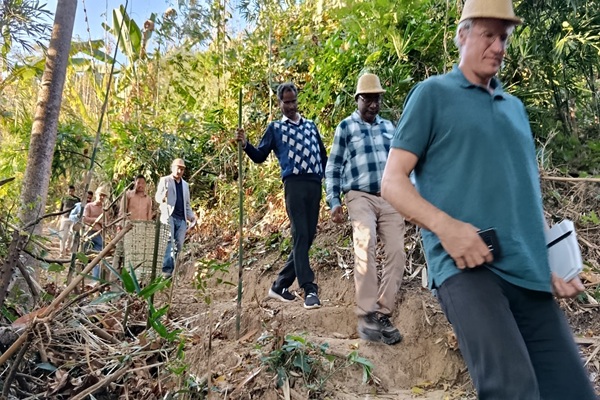
The initiative was reviewed and highly appreciated by the Mid-Term Review (MTR) Team comprising Mr. Steffen Schuelein (Germany), Ms. Monica Bosco (New Delhi), Mr. S. Prabhu, CEO and Project Director of IGDC CREFLAT, along with Dr. Rajan Kotru (GOPA), Dr. Vincent Darlong, and members of the PMC and PMA. The team congratulated the Vangmun community for becoming the first CBCA management committee in the state.
As part of the MTR field visit, the team also visited Juri Reserve Forest Village Committee under Dasda Forest Range on 24 January 2026. Detailed interactions were held with villagers to assess the impact and effectiveness of project interventions such as Entry Point Activities (EPA), soil and water conservation works, livelihood support, and climate resilience measures.
Villagers reported that over ten check dams constructed during the first phase have significantly reduced runoff, improved soil moisture, and minimized flood impacts, while emphasizing the need for regular maintenance. EPA interventions, including two market sheds and three waiting sheds, have brought visible benefits, especially for women. Female beneficiaries highlighted that the market sheds now provide dignified, all-weather spaces for selling jhum products, bamboo shoots, vegetables, and other forest produce, directly improving income security.
Communities also shared concerns over climate change impacts such as increasing water scarcity, excessive heat, declining groundwater levels, and reduced spring flows, adversely affecting agriculture. While most crops are impacted, pineapple was noted to be relatively resilient. Villagers linked forest degradation and climate stress to population pressure and expansion of rubber cultivation, stressing the need for forest restoration and diversified plantations of species like Yongchak, Amlaki, Mahogany, and Arjun.
Livelihood initiatives were also reviewed, including SHG activities in cloth trading, piggery, goatery, and emerging interests in candle making and improved market connectivity. The CIG-based fishery intervention supported through IGDC loans was found to be inclusive and well-managed, prioritizing vulnerable households through collective responsibility.
Additional community demands included a sacred grove, playground development, patta land demarcation, ANR signage, and drinking water solutions through convergence. Overall, the visit reaffirmed the IGDC CREFLAT Project’s commitment to community empowerment, climate-resilient livelihoods, biodiversity conservation, and participatory forest governance, underscoring the central role of local communities in ecological restoration and climate action.