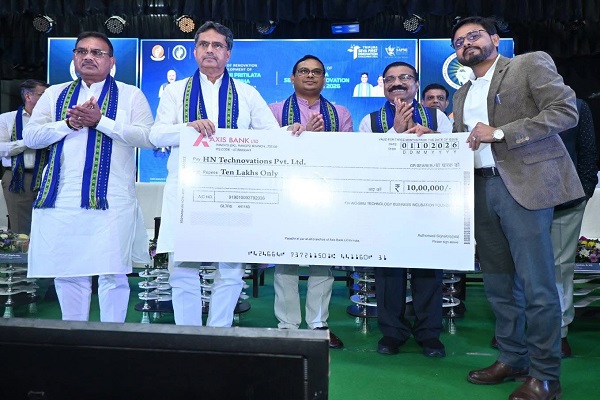
Agartala, Oct 01: InstaWater, a water technology startup with its roots in Tripura University, has been selected as a winning startup under Digi-SAPNE 2.0, receiving Rs. 10 lakh in grant support through the incubation ecosystem of Sikkim Manipal University/ Atal Incubation Centre– Sikkim Manipal University (AIC-SMU).
The achievement marks another important milestone in the journey of InstaWater, which originated from the innovation ecosystem of Tripura University and has evolved from a university-based innovation into a growing social-impact technology venture working in the field of safe drinking water and disaster-resilient water solutions.
Founded with the vision of making safe drinking water accessible in difficult-to-reach locations, InstaWater has been developing portable and decentralized water purification systems for remote communities, schools, institutions and disaster-affected areas.
The startup’s journey from the Tripura University campus to national incubation and innovation platforms highlights the role that academic institutions can play in nurturing technology-driven entrepreneurship and translating research and innovation into solutions for real-world challenges.
The Rs. 10 lakh support under Digi-SAPNE 2.0 will further strengthen InstaWater’s product development, technology capabilities and deployment efforts.
The development comes alongside the launch of Digi-SAPNE 3.0 in Tripura, reflecting the state’s continued efforts to create opportunities for young innovators, entrepreneurs and technology-led startups.
InstaWater (H N Technovations Pvt Ltd) expressed its gratitude to Tripura University, the Government of Tripura, Department of Information Technology, Sikkim Manipal University, AIC-SMU and the wider DIGI-SAPNE ecosystem for their continued support to innovation and entrepreneurship.
From a university innovation to deployments on the ground, the InstaWater journey continues to demonstrate how ideas nurtured in the Northeast can evolve into scalable solutions with wider national impact.