 Agartala, Sept 28: The Tripura Rural Economic Growth and Service Delivery Project (TRESP) has received a major boost with the World Bank describing it as one of the best-performing World Bank-supported projects in Northeast India, while calling for sustained momentum in implementation and stronger delivery of benefits at the grassroots level.
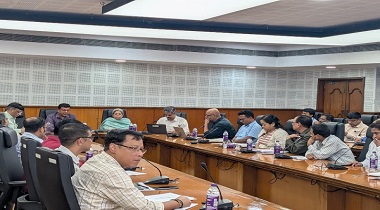
The assessment came during a three-day review mission of the World Bank that began at Pragna Bhawan on Monday. The review is examining the project's performance, livelihood initiatives, institutional strengthening measures and the roadmap for the next phase of implementation.
The opening review meeting was chaired by TRESP Project Director Subhashis Das and attended by World Bank Task Team Leader Preeti Kumar and other members of the World Bank team, including Amit Arora, Souvik Mitra, Nilanjana Gupta and Kamlesh.
According to an official release, Kumar appreciated the progress achieved under TRESP and highlighted the project’s performance among World Bank-funded initiatives in the Northeast. She urged the project authorities and stakeholder departments to build on the progress and maintain a strong focus on measurable outcomes at the field level.
A key part of the review centred on strengthening rural livelihood institutions and ensuring that community-level organisations evolve into sustainable economic platforms. Discussions covered Producer Groups (PGs), Viability Gap Funding (VGF), Cluster Level Federations (CLFs) and Community Managed Training Centres (CMTCs).
The review stressed the need to move Producer Groups beyond their initial formation by helping them develop viable businesses, establish stronger market connections and gain access to adequate working capital. The effective utilisation of VGF support was also identified as an important area for continued attention.
The functioning of CLFs and CMTCs also came under scrutiny, with emphasis on financial management, proper documentation, monitoring and capacity building. The review explored the potential of CMTCs to serve as local centres for knowledge and skill development, particularly for women engaged in farming and rural entrepreneurship.
Project Director Subhashis Das outlined three strategic priorities for taking the project forward—capacity building through SIPARD, participatory Village Development Plans (VDPs), and research-based initiatives focusing on tribal development.
He stressed the importance of strengthening training programmes for government officials through SIPARD to improve implementation and service delivery in tribal areas. He also highlighted the need to prepare VDPs in all 23 TRESP operational blocks and develop 23 Model VDPs through a participatory process.
The proposed village-level planning mechanism is aimed at incorporating local priorities and community needs into an integrated development framework. At the same time, research initiatives on tribal development are expected to generate evidence and insights that can support future policy formulation and development interventions.
Following the state-level discussions, the World Bank mission will move into the field from September 29. The team is scheduled to visit project locations in different Rural Development blocks to assess the implementation of TRESP activities and interact directly with beneficiaries, Producer Groups, community institutions, field officials and other stakeholders.
The field visits will provide the World Bank team with an opportunity to assess ground-level outcomes, identify implementation gaps and understand the experiences of communities involved with the project.
The mission will also hold detailed discussions with stakeholder departments on sector-wise progress, challenges, emerging results and measures required to accelerate implementation. The ongoing review is thus combining high-level assessment with field verification, with the objective of further strengthening TRESP's interventions in rural livelihoods, institutional capacity, participatory village planning and tribal development.
The World Bank's recognition of TRESP as a strong-performing project in the Northeast is expected to add further impetus to efforts to consolidate its achievements and ensure that project benefits translate into sustainable economic opportunities for rural and tribal communities across Tripura.